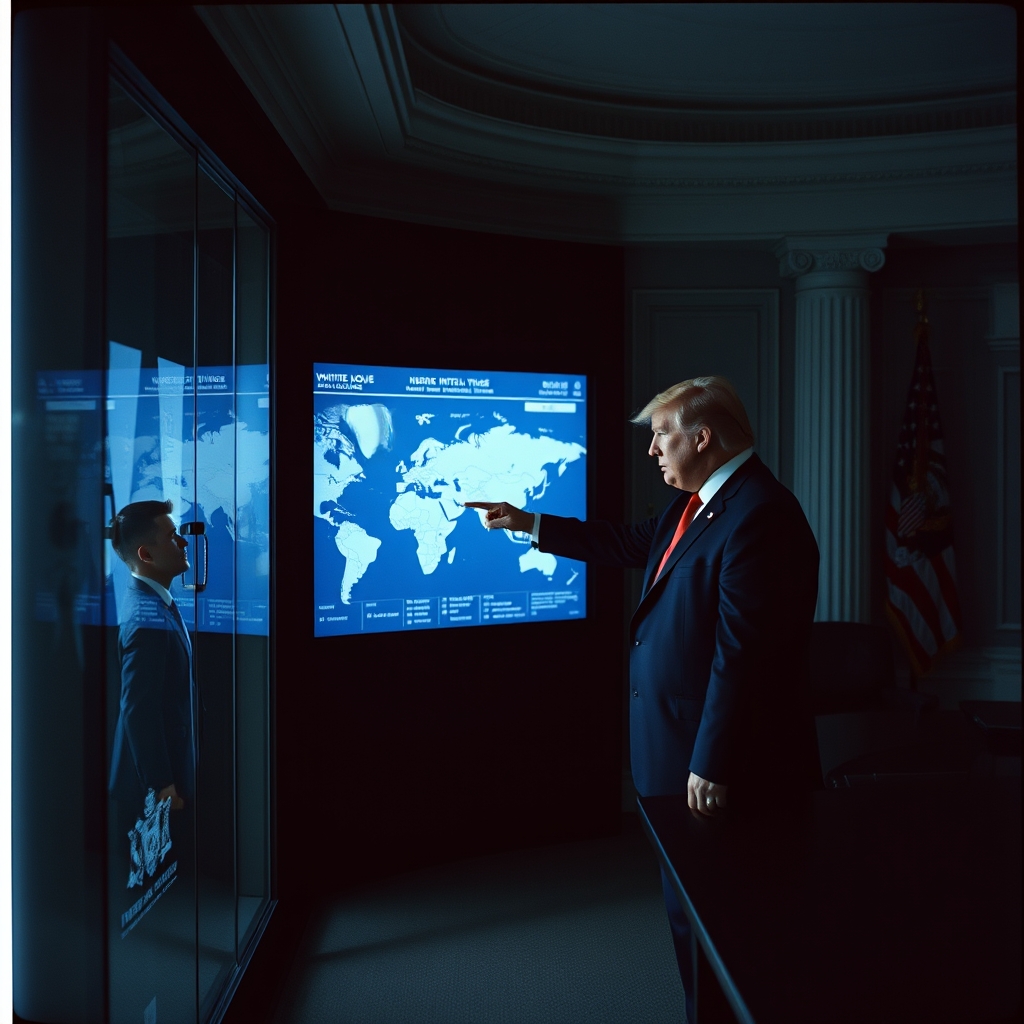
Trump names spy chief to lead ‘Super Intelligence’ taskforce – what the shift really means
According to BBC News, President Donald Trump has appointed Director of National Intelligence Jay Clayton to head a new "Super Intelligence" taskforce that will coordinate the federal government’s engagement with consumers, companies and other groups. The move comes with a fresh push to rebrand artificial intelligence (AI) as "Super Intelligence" (SI) and a refusal to consider new AI‑specific laws.
The taskforce’s composition and mandate
The taskforce brings together three senior officials:
| Member | Current role | What they bring |
|---|---|---|
| Jay Clayton | Director of National Intelligence | Access to intelligence community insights on national security implications of AI |
| Andrew Ferguson | Chair of the Federal Trade Commission | Experience regulating deceptive or harmful commercial practices |
| Emil Michael | Undersecretary of Defense for Research and Engineering | Oversight of military‑grade AI research and procurement |
All three report directly to Trump and White House Chief of Staff Susie Wiles. The stated purpose is to "coordinate the Federal Government's engagement with Consumers, Public Interest Groups, Religious Organizations, Critical Infrastructure Providers, and Super Intelligence Companies." In practice, the taskforce does not have rule‑making authority; it can convene agencies, issue guidance and collect industry input, but any binding regulation must still come from Congress or existing agencies.
Rebranding AI as “Super Intelligence” – why it matters
An executive order signed on 29 September instructs every federal department to replace the term "artificial intelligence" with "Super Intelligence" in official documents. The order also directs agencies to stop using the abbreviation "AI" altogether.
The change is largely semantic, but it has two practical effects. First, it forces every agency to update internal templates, websites and reports – a costly bureaucratic exercise. Second, it introduces a new label that industry leaders like Elon Musk have already adopted (e.g., renaming SpaceXAI to SpaceXSI). By shifting the vocabulary, the administration hopes to frame the technology as something beyond current capabilities, potentially deflecting criticism about current risks. Critics argue the term "super intelligence" traditionally describes systems that surpass human cognition, which most existing models do not yet achieve, and that the rebrand could obscure public understanding of real‑world hazards.
The regulatory debate – Warren vs Trump
Democratic Senator Elizabeth Warren has called the taskforce a "talk‑only" solution and urged Congress to pass "meaningful regulations" on AI. Warren’s position reflects a broader push from lawmakers, industry executives and safety researchers who want clearer rules around data privacy, model transparency and the mitigation of harmful outputs.
Trump, by contrast, has repeatedly rejected any slowdown in AI development, insisting that "whoever wins AI, wins" in the global competition with China. He also ruled out a joint US‑China AI venture, citing the risk of sharing U.S. secrets. The president’s stance aligns with a "self‑regulation" model that relies on a recent "morally binding" pledge signed by CEOs of OpenAI, Anthropic, SpaceX and Google, in which firms agree to police the safety of their own products.
What actually changes – trade‑offs and blind spots
The headline‑grabbing elements – a new name, a high‑profile taskforce and a refusal to legislate – mask a modest shift in power. The taskforce can coordinate messages and gather industry pledges, but it does not create new enforcement tools. That means the government still depends on existing agencies (FTC, DOJ, DoD) to act if a company crosses legal lines.
The trade‑off is clear: the administration gains political mileage by appearing proactive while avoiding the political cost of imposing restrictions that could slow commercial AI development. For companies, the arrangement offers a predictable environment – they can continue to innovate under the umbrella of a voluntary safety pact rather than face uncertain regulations. For consumers and civil‑society groups, the downside is a lack of concrete safeguards; voluntary pledges have already shown cracks, as illustrated by OpenAI’s June breach of an Australian government website that exposed non‑sensitive health data.
In practice, the taskforce’s effectiveness will hinge on two factors:
- Information flow – whether the intelligence community can translate national‑security concerns into actionable guidance for civilian firms.
- Industry compliance – whether the "morally binding" document translates into real‑world safety checks, especially when profit‑driven launch cycles remain aggressive.
If either element falters, the taskforce risks becoming a symbolic echo chamber rather than a lever for meaningful oversight.
What to watch next
- Legislative moves – monitor any bills introduced by Senate Democrats that could impose reporting or auditing requirements on AI developers.
- Follow‑up from the taskforce – the first public briefing or report, if released, will reveal whether the group plans concrete guidelines or simply reiterates existing agency policies.
- Industry safety signals – watch for further model rollbacks (like OpenAI’s recent pause) and for new incidents that expose data or security gaps.
- International posture – any shift in U.S.–China AI cooperation, especially after President Xi’s state visit, will affect the strategic framing of the taskforce.
For everyday readers, the immediate takeaway is to stay skeptical of the "Super Intelligence" label and to watch for actual policy changes rather than terminology. If you run a small business that uses AI tools, ensure your contracts include clear safety and data‑handling clauses, and keep an eye on any new federal guidance that could affect compliance obligations.