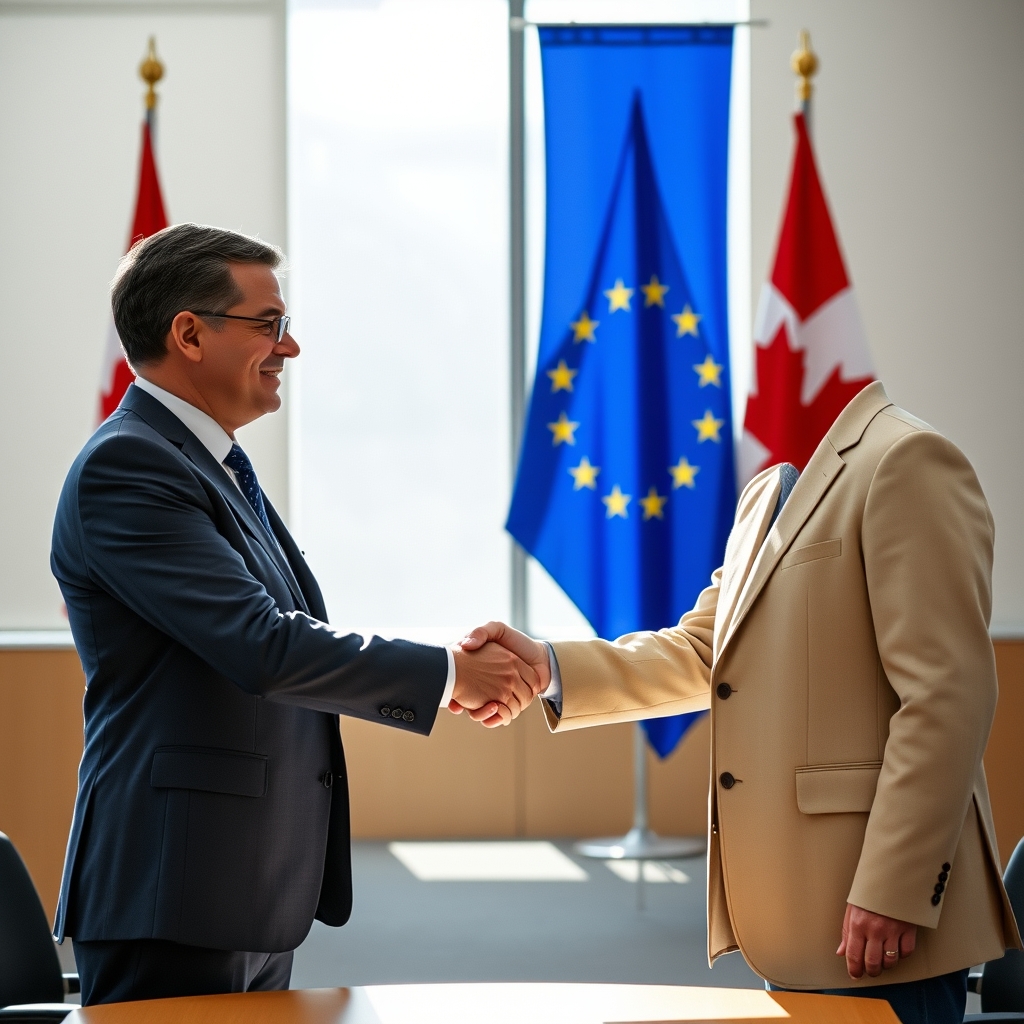
EU proposes ‘associate member’ status for Canada – what it really means
Canada could become the European Union’s first “associate member”, a label the EU has never used before. Ursula von der Leyen announced the idea in a State of the Union speech, saying Europe wants to “open the door” for a closer partnership. The proposal comes as Ottawa faces a souring relationship with the United States and a stalled trade deal.
According to BBC News, von der Leyen said the move would not be a partnership against anyone else but a way to boost “our common strength”. She listed manufacturing, technology, artificial intelligence (AI), defence, energy, critical minerals and economic security as priority areas. No concrete timetable or legal framework was offered.
What the EU means by “associate member”
The term is new for the bloc. In practice it would sit between a free‑trade agreement (FTA) and full EU membership. An associate member would likely keep its own sovereign institutions while aligning with EU rules in the sectors listed by von der Leyen. Think of it as a long‑term, sector‑by‑sector “plug‑in” rather than a full plug‑in. The EU has no legal template; creating one would require a treaty amendment, ratification by all 27 members and possibly a separate parliamentary vote in Canada.
How Canada‑EU relations work today
Canada and the EU signed a Comprehensive Economic and Trade Agreement (CETA) in 2017, which provisionally came into force in 2019. Ten EU states still have to ratify the treaty, meaning the full benefits are not yet unlocked. The agreement removes most tariffs, eases investment rules and sets standards for public procurement, but it stops short of deeper security or technology cooperation.
| Current CETA status | Proposed associate‑member scope | |
|---|---|---|
| Tariffs | Mostly eliminated | Same, plus possible joint tariff‑setting on new goods |
| Regulatory alignment | Limited to market access | Harmonisation in AI, energy, critical minerals |
| Defence cooperation | Ad‑hoc joint exercises | Formal coordination, possibly joint procurement |
| Decision making | No voting rights | Advisory role in EU committees on listed sectors |
| Legal ratification | 10 of 27 EU states pending | Full treaty amendment, requiring unanimity |
The table shows that most day‑to‑day trade would stay the same, while the big shift would be in policy influence and regulatory alignment.
Trade and political trade‑offs
Canada is looking for alternatives after the United States pulled the plug on its own trade talks and President Trump repeatedly hinted at making Canada a “51st state”. An associate status could give Ottawa a new market‑sized partner and a political backstop against US pressure. For Europe, the move would diversify supply chains for critical minerals and give the bloc a like‑minded ally on AI standards and climate policy.
The flip side is risk. Aligning with EU rules could force Canada to adopt stricter environmental or labour standards, which some provinces argue would raise costs for local producers. Conversely, EU members that have already committed to a full EU accession path (the western Balkans, Georgia, Moldova) may see the Canada deal as a distraction or a precedent that weakens the credibility of the enlargement process.
The real change – a limited, sector‑by‑sector partnership, not a shortcut to EU membership
What actually changes is the depth of coordination, not the legal status of Canada. In practice, an associate member would sit in EU‑led working groups on AI, defence procurement and mineral extraction, gaining a seat at the table but no vote on core EU legislation. That means Canada could influence standards that affect global supply chains, but it would still be subject to EU decisions it cannot block.
The trade‑off nobody spells out is the cost of regulatory convergence. If Canada adopts EU standards on AI, for example, its tech firms will need to redesign systems to meet the EU’s “risk‑based” approach, a process that can take years and require new compliance teams. At the same time, EU firms would have to navigate Canadian regulations, which differ on data localisation and privacy. The net benefit depends on how much each side values market access versus compliance costs.
Another hidden element is political signalling. By offering associate status, the EU signals that it can extend partnership tools beyond its borders, potentially encouraging other non‑EU countries to ask for similar deals. That could dilute the EU’s bargaining power in future trade negotiations if it has to juggle multiple associate arrangements.
What to watch next
- Treaty text – The EU will need to draft a legal instrument. Watch for the first draft, which will reveal whether the associate status includes voting rights in any EU bodies.
- Ratification timeline – All 27 EU states must sign off. Countries that have yet to ratify CETA, such as the Czech Republic and Slovakia, may use the Canada proposal to extract concessions.
- Domestic reaction in Canada – Provincial governments and industry groups will lobby on whether the regulatory alignment outweighs the benefits. Their statements will indicate how quickly Ottawa can move.
- US response – If Washington sees the move as a rebuke, it may ramp up tariff threats or offer its own concessions to keep Canada in the North American trade bloc.
- Security council proposal – Von der Leyen also floated a European Security Council that would include Canada. Whether that becomes a reality will affect the defence dimension of the associate partnership.
If you are a business that trades across the Atlantic, start mapping which of your products fall under the sectors listed by the EU. Identify the regulatory gaps between EU and Canadian standards now, so you can budget for any redesign or certification work if the associate framework materialises. For policymakers, the key question is whether the symbolic boost in diplomatic ties justifies the administrative and legislative effort required.