US Strikes Iranian Tankers, Iran Fires Missiles at Jordan Base – What the Escalation Means
According to BBC News, U.S. forces hit five Iranian oil tankers on Tuesday, sinking one, after Tehran fired missiles at a U.S. base in Jordan. The back‑and‑forth attacks have pushed oil prices higher and raised the risk of a wider regional flare‑up. Understanding what each side is targeting and why helps businesses, investors and travellers gauge the real stakes.
The recent naval cat‑and‑mouse game
In the past week the United States and Iran have exchanged fire at sea several times. On Tuesday the U.S. said it struck four IRGC‑linked tankers in the Gulf of Oman and a fifth near Kharg Island, the main oil export hub where about 90 % of Iran’s crude passes through pipelines to the sea. One of the ships, the merchant tanker M/T Riesco, was filmed sinking in the Gulf.
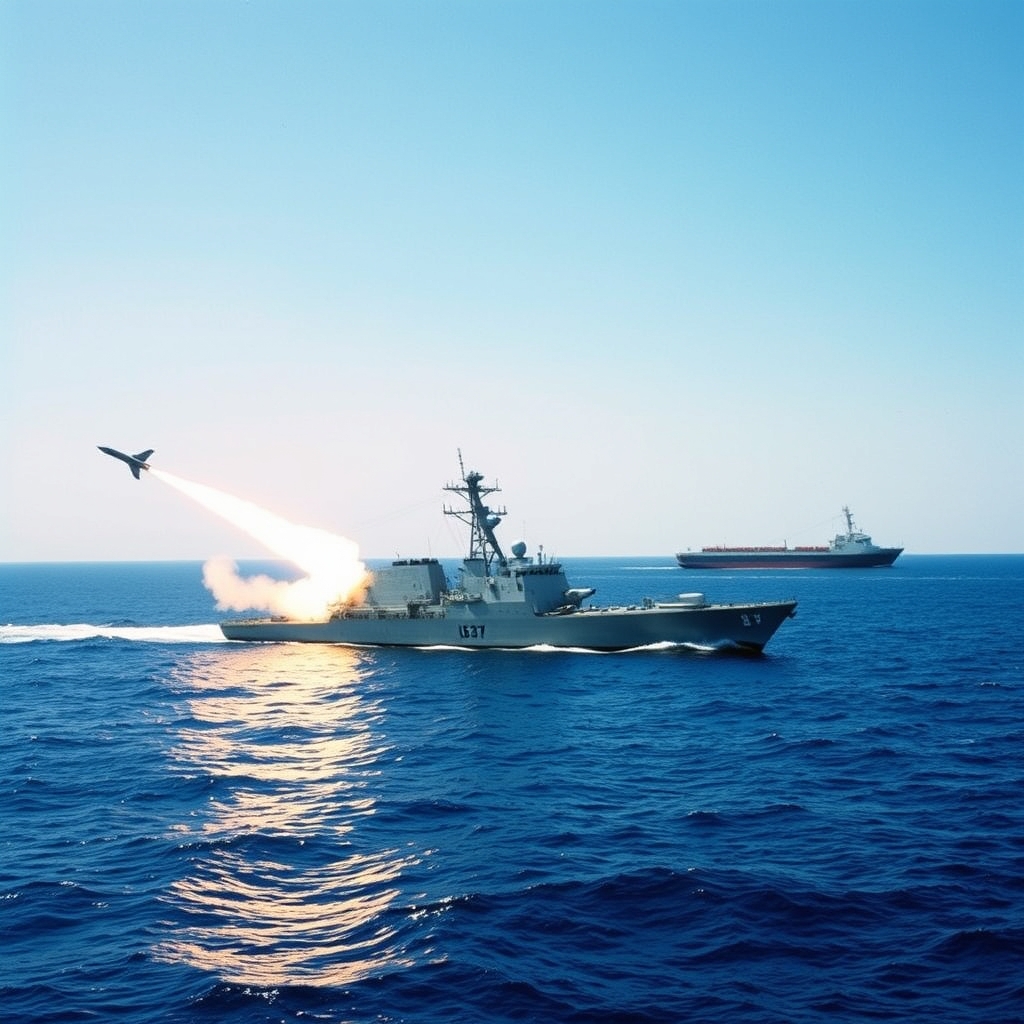
Iran’s Revolutionary Guard Corps (IRGC) responded by launching a volley of missiles at a U.S. base in Jordan. Jordan’s armed forces reported shooting down 18 of the 20 missiles; the remaining two fell in unpopulated areas. Tehran also claimed it hit two U.S. vessels and eight tankers in the Strait of Hormuz, though the U.S. said its warship evaded the ballistic missiles and no American personnel were injured.
The tit‑for‑tat comes after the February 28 attacks by the U.S. and Israel that marked the first direct strikes on Iranian soil since 2020. Both sides now accuse the other of targeting civilian shipping, blurring the line between military and commercial targets.
What the United States says it hit
Centcom (U.S. Central Command) described the five tankers as part of a “multi‑billion‑dollar shadow network” that finances the IRGC and its regional proxies. The four Gulf of Oman vessels were linked to the IRGC, but the report did not name them. The fifth tanker, attacked near Kharg Island, was also tied to the same network. The U.S. justified the strikes as a way to choke revenue that funds missile and drone programmes.
| Target | Location | Reported outcome |
|---|---|---|
| M/T Riesco | Gulf of Oman | Sank, video posted on X |
| Tanker 1 (unnamed) | Gulf of Oman | Hit, status unclear |
| Tanker 2 (unnamed) | Gulf of Oman | Hit, status unclear |
| Tanker 3 (unnamed) | Gulf of Oman | Hit, status unclear |
| Tanker 4 (unnamed) | Near Kharg Island | Hit, status unclear |
The lack of detailed information on the four unnamed vessels leaves room for speculation about how much oil they were carrying or whether any crew were injured.
Iran’s missile launch and its broader claims
Iran’s navy said it launched the missiles from the Red Sea, aiming at the U.S. Al‑Dhafra air base in Jordan. Jordan’s successful interceptions suggest the missiles were either short‑range or lacked the accuracy of more advanced cruise missiles. Iran also announced it seized an unmanned U.S. submarine in the Strait of Hormuz – a claim the U.S. later blamed on a malfunctioning underwater drone that had been deployed for surveillance.
In the same week, Yemen’s Iran‑backed Houthi movement attacked Saudi oil facilities, causing temporary shutdowns and injuries. The concurrent attacks on Saudi and U.S. assets illustrate how the same regional actors can open multiple fronts, stretching the response capacity of coalition forces.
What the escalation really changes – trade‑offs and warning signs
The headline‑grabbing strikes do not fundamentally shift the balance of naval power; the U.S. still controls the sea lanes, and Iran’s missile salvos lack the precision to threaten well‑defended bases. The real shift is economic. Brent crude rose 1.5 % to $99.35 a barrel and U.S. WTI to $94.23, reflecting market anxiety about supply disruptions through the Strait of Hormuz, a chokepoint that carries roughly a fifth of global oil shipments.
The trade‑off for the United States is that each successful strike on a tanker chips away at Iranian revenue, but it also raises the likelihood of Iranian retaliation against commercial shipping, which could invite insurance spikes and higher freight rates. For Iranian businesses, the loss of even a single tanker can dent cash flow, but the IRGC’s diversified network—spanning drones, proxies in Iraq and Lebanon, and illicit trade—means the blow may be more symbolic than decisive.
Who gains? Regional rivals of Iran, such as Saudi Arabia and the United Arab Emirates, may benefit from a short‑term price bump that supports their oil‑export budgets. Who loses? Global oil consumers face higher pump prices; shipping companies risk higher insurance premiums and possible rerouting around the Hormuz bottleneck, adding time and fuel costs.
What to watch next? Three clear signals will indicate whether the situation is contained or spirals:
- U.S. naval posture – A noticeable increase in carrier or destroyer presence near the Gulf of Oman would suggest a readiness for further strikes.
- Iranian missile accuracy – If future launches consistently breach defenses, the threat to bases and commercial vessels rises.
- Oil market reaction – A sustained rise above $100 a barrel without a clear supply shock often points to speculative positioning rather than physical scarcity.
Practical steps for businesses and travelers
- Oil‑dependent firms should lock in hedge contracts now if their budgets cannot absorb a 2‑3 % price swing in the next month.
- Shipping operators must verify that their war‑risk insurance covers the Gulf of Oman and Hormuz; consider filing a claim for any recent premium increase.
- Travel agencies should advise clients heading to Jordan, Saudi Arabia or the UAE to monitor local security advisories, especially near military installations.
- Investors could trim exposure to airlines and logistics firms that have tight margins, as fuel cost spikes erode profitability.
- Energy analysts ought to track the next round of statements from Centcom and Iran’s IRGC for clues about whether the “shadow network” will face additional sanctions.
By staying on top of these concrete signals, decision‑makers can avoid overreacting to headlines while protecting themselves from the genuine ripple effects of the naval clash.