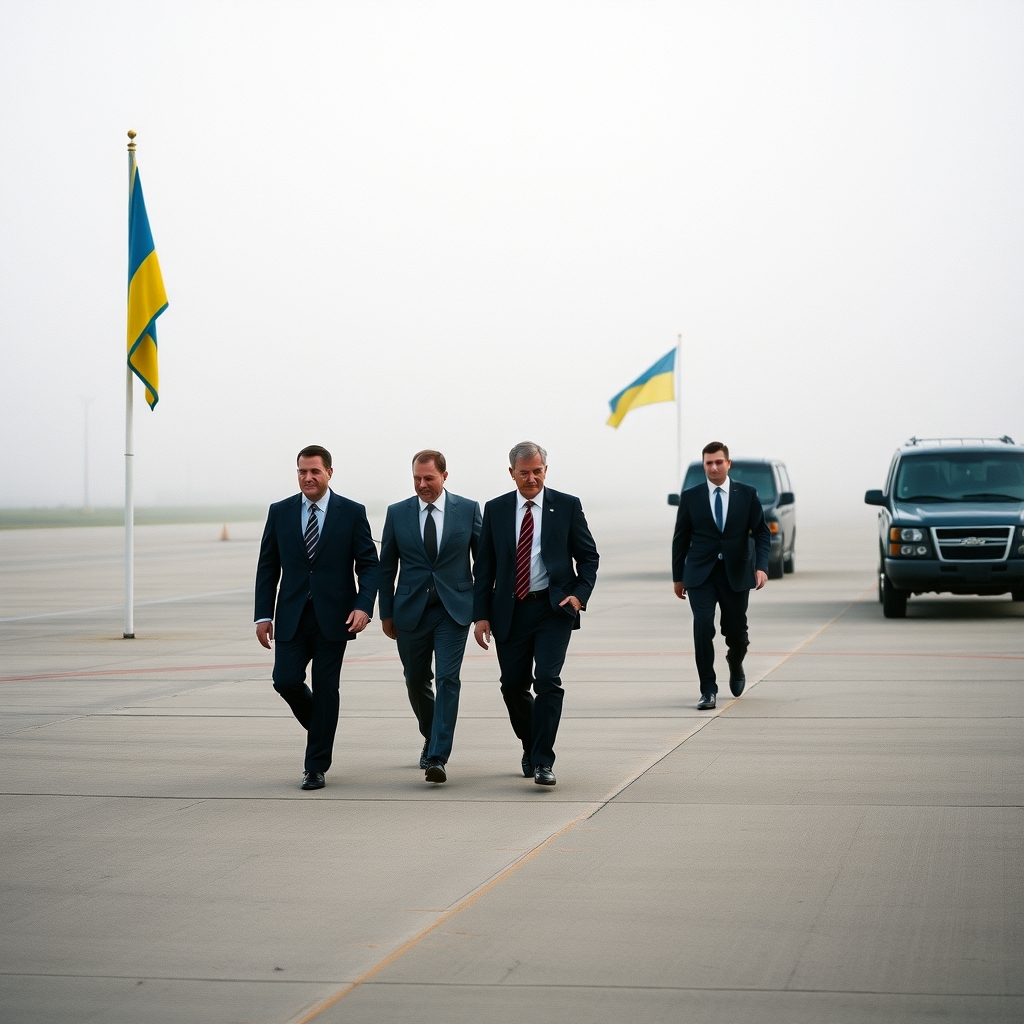
US envoys head to Kyiv after closed‑door talks with Putin
According to BBC News, two senior US envoys met Russian President Vladimir Putin in Moscow on Saturday and arrived in Kyiv on Sunday to continue talks on ending the war in Ukraine. The rapid move from the Kremlin to the Ukrainian capital signals a brief diplomatic window, but the details of any concrete plan remain vague.
Background: The latest diplomatic shuffle
The meeting in Moscow was the first face‑to‑face encounter between US negotiators and Putin since the war began in February 2022. Steve Witkoff, a US special envoy for reconstruction, and Jared Kushner, a former White House senior adviser, spent three hours behind closed doors at the Kremlin. Both sides issued broadly positive statements, but no specifics were released.
Their arrival in Kyiv marks the first time that envoys identified by the Trump administration have set foot in the Ukrainian capital during the conflict. President Volodymyr Zelenskyy welcomed them, saying his team was “ready for the conversation” and stressing the need for “peace and security guarantees” delivered in a “coordinated, substantive, and realistic manner.”
What the Moscow talks covered (as reported)
Russian adviser Yuri Ushakov described the session as “constructive, extremely frank.” He said the discussion went beyond the immediate crisis, touching on:
- Economic cooperation and potential large‑scale Russian‑American projects.
- Acknowledgement of Russian army advances in the combat zone.
- The “root causes of the conflict,” a phrase that hints at security guarantees, NATO expansion, and Ukraine’s sovereignty.
The talks also coincided with a three‑day cease‑fire on capital‑city strikes agreed by Putin and Zelenskyy, suggesting both sides were willing to create a narrow breathing space for diplomatic exchange.
Who stands to gain or lose
| Stakeholder | Potential gain | Potential loss |
|---|---|---|
| United States | A chance to shape any settlement and showcase diplomatic influence; possible leverage over reconstruction contracts. | Risk of being blamed if talks stall; domestic criticism for using former political allies as negotiators. |
| Russia | Opportunity to ease sanctions through economic projects; a narrative of constructive engagement. | Concessions on territory or security guarantees could be seen as weakness at home. |
| Ukraine | Faster path to an end of hostilities; possible security guarantees. | Any deal that freezes Russian control over one‑fifth of its territory would cement a loss of land. |
| European allies | Reduced risk of escalation; a clearer framework for post‑war aid. | Exclusion from talks could limit their influence on the final settlement. |
The table shows that each player can walk away with a diplomatic win, but each also faces a political or strategic cost that could shape their willingness to compromise.
The hidden trade‑off: limited progress vs diplomatic signaling (Analysis)
What the headlines do not spell out is the difference between a symbolic gesture and a substantive breakthrough. The three‑hour Kremlin meeting produced no public roadmap, yet the rapid flight to Kyiv creates a perception of momentum. In practice, this usually means two things:
- Signal to domestic audiences – Both Putin and Zelenskyy can claim they are engaged in peace talks, which may calm hard‑line factions and reduce immediate pressure for further strikes.
- Time‑buying for negotiators – The pause in capital strikes buys both sides breathing room to test ideas without the risk of civilian casualties inflaming public opinion.
The trade‑off is that a visible diplomatic effort can raise expectations among Ukrainians and their supporters. If the next weeks bring no concrete announcement, the goodwill generated could evaporate, leaving the envoys viewed as window‑dressers rather than peacemakers. Moreover, the lack of an explicit agenda makes it hard for outside observers to assess whether the talks are moving toward a viable settlement or merely a pause in fighting.
What to watch next
The next few weeks will reveal whether the “substantive plans for next steps” mentioned by the White House materialise. Key indicators include:
- An official statement from either the US State Department or the Ukrainian presidential office outlining any agreed‑upon framework.
- Confirmation of whether the three‑day cease‑fire on capital strikes is extended or expanded to other fronts.
- Signals from NATO and the EU about their involvement or exclusion from the negotiation track.
- Any mention of reconstruction projects, which could hint at the economic component Ushakov highlighted.
If none of these materialise, the diplomatic window may close, and the conflict could revert to its previous intensity.
Practical advice for readers
- Stay updated through official channels – the US State Department, Kyiv’s presidential website, and reputable news outlets – rather than speculation on social media.
- If you support humanitarian relief, direct donations to vetted organizations working on missile‑interceptor shortages and civilian shelter in Ukraine.
- For businesses with supply‑chain exposure to the region, monitor any announcements about reconstruction contracts, as they could affect procurement timelines.
- Keep an eye on travel advisories if you plan to visit the region; airspace over Ukraine remains closed to civilian flights.