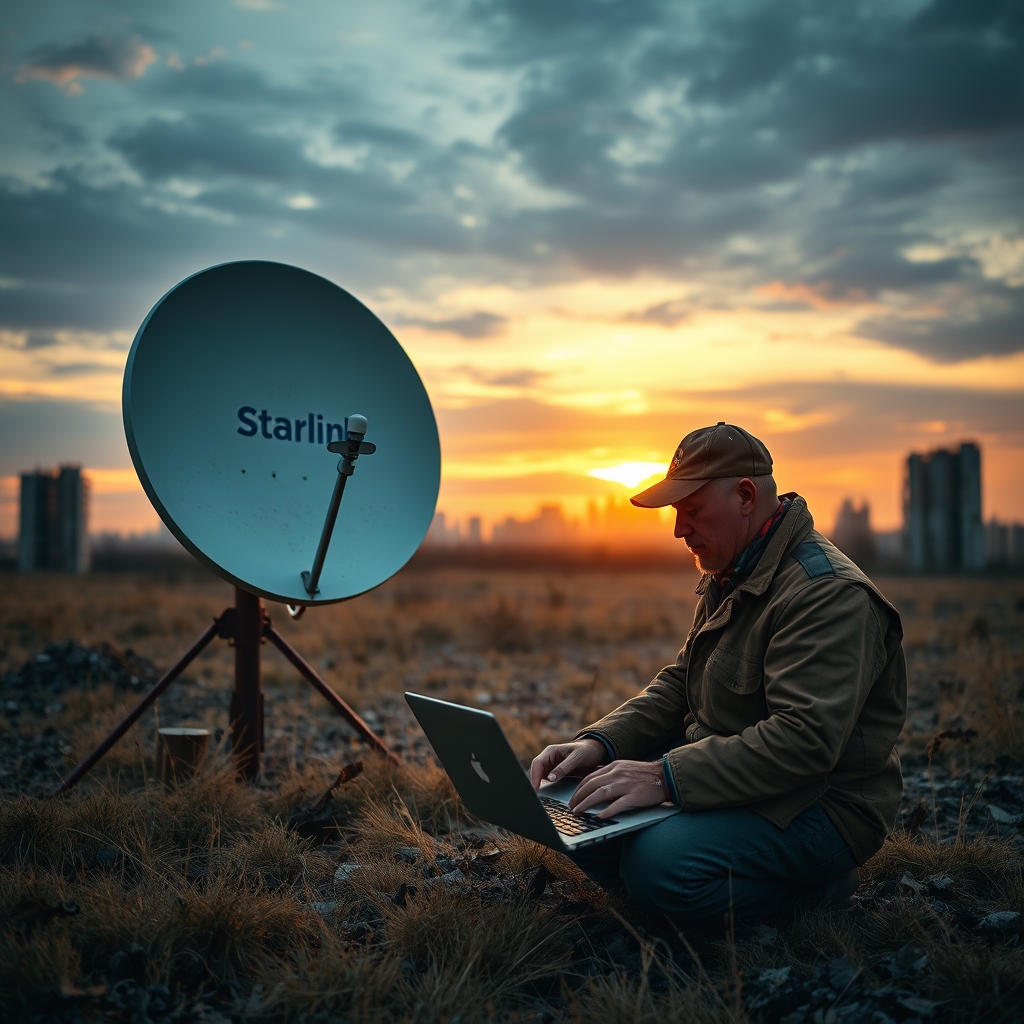
SpaceX’s Starlink limits in Ukraine: what changed and why it matters
According to BBC News, Elon Musk said SpaceX throttled Ukraine’s Starlink internet after the Ukrainian side used the civilian service for offensive drone strikes, and the connection has now been restored.
The episode revives a familiar dilemma: a private broadband provider becomes a de‑facto military asset, and the owner draws a line between civilian use and combat operations.
How Starlink and Starshield actually work
Starlink is a constellation of low‑Earth‑orbit (LEO) satellites that beams broadband to a ground terminal the size of a pizza box. Because the satellites sit only about 550 km above the Earth, latency – the delay between sending a request and receiving a reply – stays under 30 ms, fast enough for voice calls, video, and even some real‑time control of unmanned systems.
Starshield is a separate, government‑run feed that uses the same orbital hardware but adds encryption, hardened terminals, and higher‑capacity links. The U.S. Department of Defense contracts SpaceX to run it, so the United States retains full control over who can access that stream.
Both services share the physical satellites, but the software and ground‑segment security differ. In practice, Starlink is a “commercial broadband” product with a standard terms‑of‑service (ToS) that bans "unequivocally offensive" military actions. Starshield’s ToS are defined by the U.S. government and allow targeting data and real‑time video for combat drones.
What the restriction looked like on the battlefield
| Feature | Starlink (civilian) | Starshield (military) |
|---|---|---|
| Typical downlink speed | 50‑200 Mbps | 200‑500 Mbps |
| Latency | 20‑30 ms | ≤20 ms |
| Encryption | Standard TLS (public‑key) | End‑to‑end classified encryption |
| Allowed use | civilian, humanitarian, limited military coordination | full combat‑type operations |
| Speed cap for drones (reported) | 70‑90 km/h (43‑56 mph) | No published cap |
When Musk says the “loophole was closed”, he is referring to the speed cap that Ukrainian advisers said limited drones to about 90 km/h. That cap makes it impossible for many strike‑oriented drones, which typically cruise at 300‑400 km/h, to stay connected for the duration of a mission. The cap also prevented the terminal from maintaining a stable link once a drone crossed into Russian airspace, where the service is not authorized.
What actually changes for Ukraine’s forces
The practical effect is two‑fold. First, ground units that rely on Starlink for coordination – for example, infantry using voice‑over‑IP or sending situational photos – keep a reliable link. Second, the high‑speed data streams needed for real‑time targeting, live video from interceptor drones, and long‑range strike coordination shift back to Starshield or to other, less capable channels.
Musk’s statement that SpaceX “has done more to defend Ukraine than any private company on Earth” reflects the fact that without the satellite broadband, many remote Ukrainian units would be isolated. The trade‑off, however, is that the civilian network now enforces a stricter firewall around offensive use. Ukraine’s Defence Minister Yevhenii Khmara announced that the connection is now “stable” and that drones can exceed 400 km/h, suggesting that the speed restriction was lifted or that operators have moved those missions onto Starshield.
In short, the restriction forces Ukrainian commanders to separate pure coordination (Starlink) from strike‑level data (Starshield). That division adds logistical overhead and limits the flexibility that a single, unified network would provide.
What to watch next
- Starshield access approvals – The United States controls who can tap the secure feed. Any change in policy, especially amid U.S. political pressure, could further shape Ukraine’s operational tempo.
- Alternative satellite providers – Companies such as OneWeb and Europe’s Eutelsat are testing LEO constellations. If they secure export licences for Ukraine, the reliance on SpaceX could diminish.
- Legal battles over ToS enforcement – The current episode may set a precedent for other private firms that find their services used in conflict zones. Watch for court filings or regulatory guidance.
- Ukrainian procurement of ground‑based backup – Investment in mobile microwave links or ruggedised terrestrial fibre could reduce the strategic leverage any single provider holds.
Practical steps for stakeholders
- Humanitarian NGOs: Verify that your field teams are using Starlink only for coordination and data transfer that falls under the civilian ToS. If you need higher‑security links, request access to Starshield‑type services through your government liaison.
- Journalists: When citing communications from the front line, note whether the source is using Starlink or Starshield, as the former may be subject to speed caps that affect real‑time reporting.
- Policy makers: Clarify the conditions under which the U.S. will continue to fund or permit Starshield access. A transparent framework will help Ukrainian planners allocate resources without surprise throttles.
- Tech firms: Consider offering a clear, publicly documented policy for military‑related use of commercial satellite services. The lack of such a policy fuels uncertainty and political pressure.
By keeping the distinction between civilian broadband and government‑grade satellite links clear, Ukraine can preserve the benefits of global connectivity while avoiding sudden service cuts that jeopardise battlefield effectiveness.