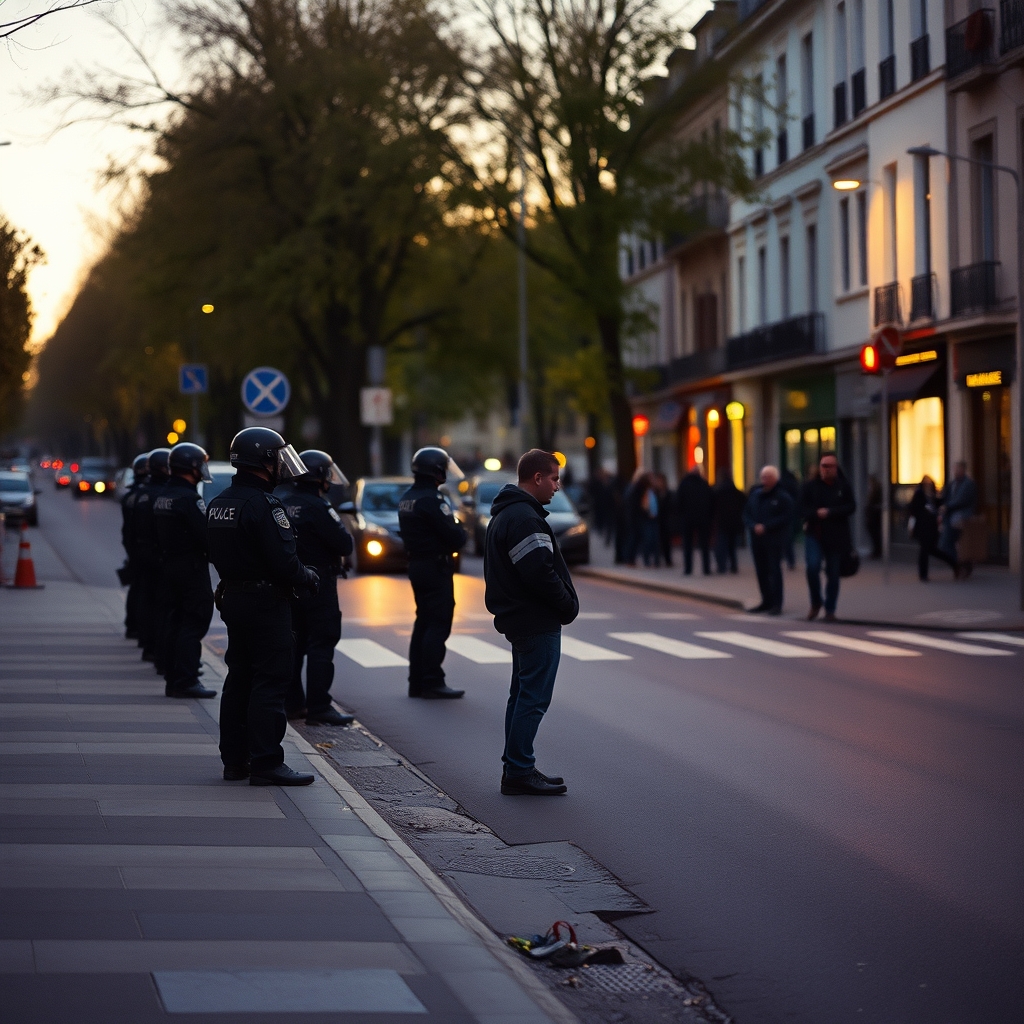
Paris suburb shooting labelled terrorism raises questions about weapon controls and intelligence gaps
One person was killed and five others wounded – three seriously – in a drive‑by shooting that spanned two suburbs south‑west of Paris on Friday. The attack, carried out from a grey Renault Clio, hit a petrol station, a medical centre and a playground before the suspect was caught nearby. Authorities are treating it as "murder in connection with a terrorist enterprise" and are probing both a possible racist/Islamophobic motive and links to a terrorist group.
According to BBC News, the interior minister called the incident a terrorist crime, the national anti‑terror prosecutor listed a Category A weapon among the offences, and the 39‑year‑old suspect was known to police but not on France’s intelligence watch‑list.
The incident in detail
The shooter drove through Trappes and La Verrière, firing bursts from an older‑style semi‑automatic rifle that dates back to World Two. Witnesses said he fired randomly from the car window, aiming at pedestrians and vehicles. The mayor of Trappes, Ali Rabeh, described the pattern as a deliberate attempt to maximise casualties, noting that victims included a 12‑year‑old girl wearing a headscarf and a man of African origin who later died.
Police arrested the suspect in the nearby town of Coignières after a short pursuit on the N10 road. He is a 39‑year‑old who had previously come to the attention of local police but was not flagged by the national anti‑terrorism office. The interior minister said the motive remains unclear, while the prosecutor’s statement added that the investigation covers "murder in connection with a terrorist enterprise" and an aggravated circumstance linked to perceived race, ethnicity, nation or religion.
Legal framing and weapon classification
French anti‑terror law distinguishes between ordinary murder and "murder in connection with a terrorist enterprise". The latter triggers a broader investigative toolkit, including longer pre‑trial detention and the ability to search for links to extremist networks. In this case, the prosecutor also cited possession of a Category A weapon – a classification that covers military‑grade firearms or weapons capable of burst fire.
| Category | Typical examples | Legal consequences |
|---|---|---|
| A | Military‑grade rifles, burst‑fire semi‑automatics | Up to life imprisonment, special anti‑terror courts |
| B | High‑capacity pistols, certain assault rifles | Up to 20 years, can be tried in ordinary courts |
| C | Standard civilian firearms, low‑capacity rifles | Standard criminal penalties |
The weapon used in the Trappes attack falls into Category A because it can fire multiple rounds per trigger pull. Possession alone carries a severe penalty, regardless of whether the owner had a licence. French law requires a special permit for Category A arms, which are usually restricted to the military or law‑enforcement agencies.
The hidden trade‑off nobody spells out
Labeling the attack as terrorism expands the state’s investigative reach, but it also shifts public perception. The trade‑off is between a more robust security response and the risk of inflating the number of incidents classified as terrorism, which can dilute the term’s meaning. In practice this usually means a larger police presence, more resources allocated to the anti‑terror prosecutor’s office, and a higher likelihood of preventive measures such as surveillance of the suspect’s contacts.
At the same time, the case highlights a gap in intelligence: the shooter was known to local police but never flagged by national services. The “watch‑list” system is designed to prioritize individuals deemed a serious threat, yet it missed a person who could acquire a Category A weapon and execute a multi‑location attack. The cost of expanding the watch‑list is higher administrative burden and potential civil‑liberty concerns, while the cost of missing such individuals is the very violence seen in Trappes.
Who gains, who loses – political and security implications
- Local communities – Residents of Trappes and La Verrière face heightened fear and disruption from the police deployment. Their trust in security forces may erode if investigations stall or if the terrorist label is perceived as a political tool.
- National government – The interior minister can showcase a swift response, reinforcing a narrative of zero tolerance for terrorism. However, criticism may arise over the lack of prior intelligence and the ease with which a Category A weapon entered civilian hands.
- Police and intelligence agencies – They gain additional resources to investigate the incident, but they also inherit scrutiny over coordination failures. The case may prompt a review of information sharing between local and national units.
- Extremist groups – If the motive proves to be linked to a broader ideology, the publicity could serve as recruitment propaganda. Conversely, a strong legal response may deter similar lone‑actor plots.
What to watch next – signals for future developments
- Court filings – The prosecutor’s indictment will reveal whether conspiracy with an organized terrorist group is proven, or if the case remains a lone‑wolf act with a hate‑motivated angle.
- Weapon trace – Tracing the World‑War‑Two rifle will show how Category A arms circulate on the black market, potentially prompting stricter import controls.
- Intelligence reforms – Expect parliamentary questions about the gap between local police knowledge and national watch‑lists. Any policy shift will be a key indicator of how France balances security and civil liberties.
- Community response – Statements from local leaders, especially those representing immigrant communities, will gauge social cohesion and the risk of further polarization.
Practical steps for residents
- Keep a record of any suspicious activity and report it promptly to the local police, especially if you notice unregistered firearms.
- If you own a firearm, verify that your licence matches the weapon’s classification; illegal possession of a Category A weapon carries severe penalties.
- Stay informed through official channels rather than rumors; misinformation can exacerbate fear and hamper investigations.
- Community groups should organize dialogue sessions with law‑enforcement liaison officers to rebuild trust and address concerns about hate‑motivated violence.