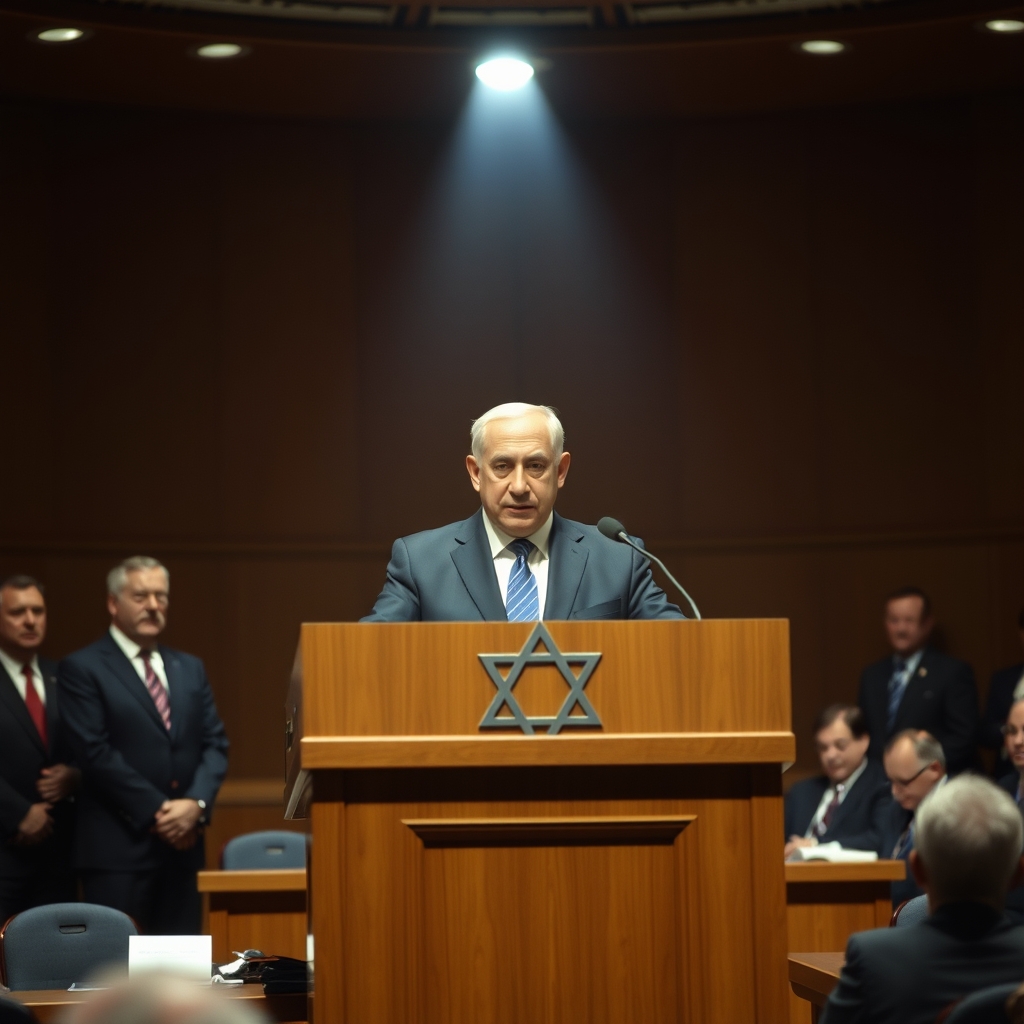
Netanyahu Leads but Still Needs Partners to Govern Israel
According to BBC News, Israel’s election night left Benjamin Netanyahu’s Likud bloc ahead but still below the 61‑seat threshold needed to form a government. The unfinished tally turns the country’s next weeks into a high‑stakes negotiation over who will actually run the state.
The Numbers So Far
The vote count reached about 85 % when the first estimates were released. Netanyahu’s Likud party, backed by far‑right and ultra‑Orthodox allies, was on track for 53 seats in the 120‑seat Knesset. Gadi Eisenkot’s Yashar party, together with three other Jewish opposition groups, was projected at 48 seats. Arab‑led lists, mainly the United Arab List and the Joint List, were set to claim an unprecedented 19 seats.
The turnout hit 77.7 %, the highest in more than two decades, showing strong public engagement after the October 2023 Hamas attack and the subsequent wars. Still, 430,000‑480,000 absentee ballots from soldiers and diplomats remain to be counted, meaning the final seat distribution could shift by a handful of places.
What the Coalition Math Means
Israel’s parliamentary system requires a coalition that controls at least 61 seats. No single party ever reaches that on its own, so alliances are the norm. The current math looks like this:
| Bloc | Projected Seats | Key Partners |
|---|---|---|
| Netanyahu’s right‑wing bloc | 53 | Far‑right parties, ultra‑Orthodox parties (e.g., Shas, United Torah Judaism) |
| Eisenkot’s “Change” bloc | 48 | Center‑left parties (Democrats, Meretz), possibly Arab parties |
| Arab parties | 19 | United Arab List, Joint List |
If Netanyahu can pull all his right‑wing and religious partners together, he still falls short by 8 seats. The Arab parties, who have pledged not to join a government that includes most Jewish parties, could become king‑makers only if the opposition bloc manages to bring them into a coalition. However, every Jewish party except one has publicly ruled out working with the Arab lists, limiting that path.
The Political Stakes
Beyond seat counts, the election decides the direction of several flashpoints:
- Security policy – voters are still processing the security failures that led to the Oct 7 Hamas attack and the subsequent wars in Gaza, Lebanon and Iran.
- Judicial reforms – Netanyahu’s previous attempts to curb the Supreme Court’s power sparked massive protests; the new parliament will determine whether those reforms stay or are rolled back.
- Military conscription – the ultra‑Orthodox community has traditionally been exempt from service; the next government will decide whether to enforce broader drafting.
- International standing – a coalition heavily weighted toward far‑right parties could face diplomatic friction, especially over settlement policy and relations with the United States and the EU.
Each of these issues will shape daily life for Israelis and influence the country’s foreign policy.
The Hidden Cost of a Right‑Wing Coalition
The trade‑off most commentators skim over is the policy rigidity that comes with a coalition dominated by religious‑nationalist parties. Ultra‑Orthodox partners demand generous state funding for their yeshiva schools and exemptions from military service. In practice, this usually means higher budget allocations for religious institutions and a smaller pool of soldiers, which can strain Israel’s defense readiness.
At the same time, far‑right factions often push for expanded settlement activity in the West Bank. While that satisfies a segment of their voter base, it risks inflaming tensions with the Palestinians and drawing condemnation from key allies. The combination of religious budget demands and settlement expansion can limit the government’s flexibility on security and diplomatic fronts.
For investors and business leaders, the hidden cost shows up as policy uncertainty. Government contracts for defense firms, construction projects in disputed territories, and social‑service budgets may swing sharply depending on which partners secure the coalition.
What to Watch in the Coming Days
- Absentee ballot count – the remaining ballots could add a few seats to any bloc, potentially narrowing or widening the gap.
- President Isaac Herzog’s consultations – after the official results, Herzog will meet with leaders of all factions and invite the person he believes can assemble a majority. His judgment will shape who gets the first shot at forming a government.
- Coalition proposals – watch for public statements from Likud, Yashar and the Arab parties about possible partnerships. A sudden overture from an Arab party to the opposition could reshape the balance.
- Timeline for a new election – if no coalition reaches 61 seats within weeks, Israel may be forced into another election, extending political instability.
Practical Takeaway
If you follow Israeli politics for business, security or advocacy reasons, start by tracking the official seat count released by the Central Elections Committee. Note any shifts in the Arab parties’ numbers, as those will dictate whether the opposition bloc can reach a governing majority. Keep an eye on statements from President Herzog about coalition talks; his invitation to a leader usually signals which side is gaining traction. Finally, consider how a right‑wing coalition’s budget priorities could affect sectors like defense procurement, construction, and social services – those areas will feel the first ripple effects of any agreement.