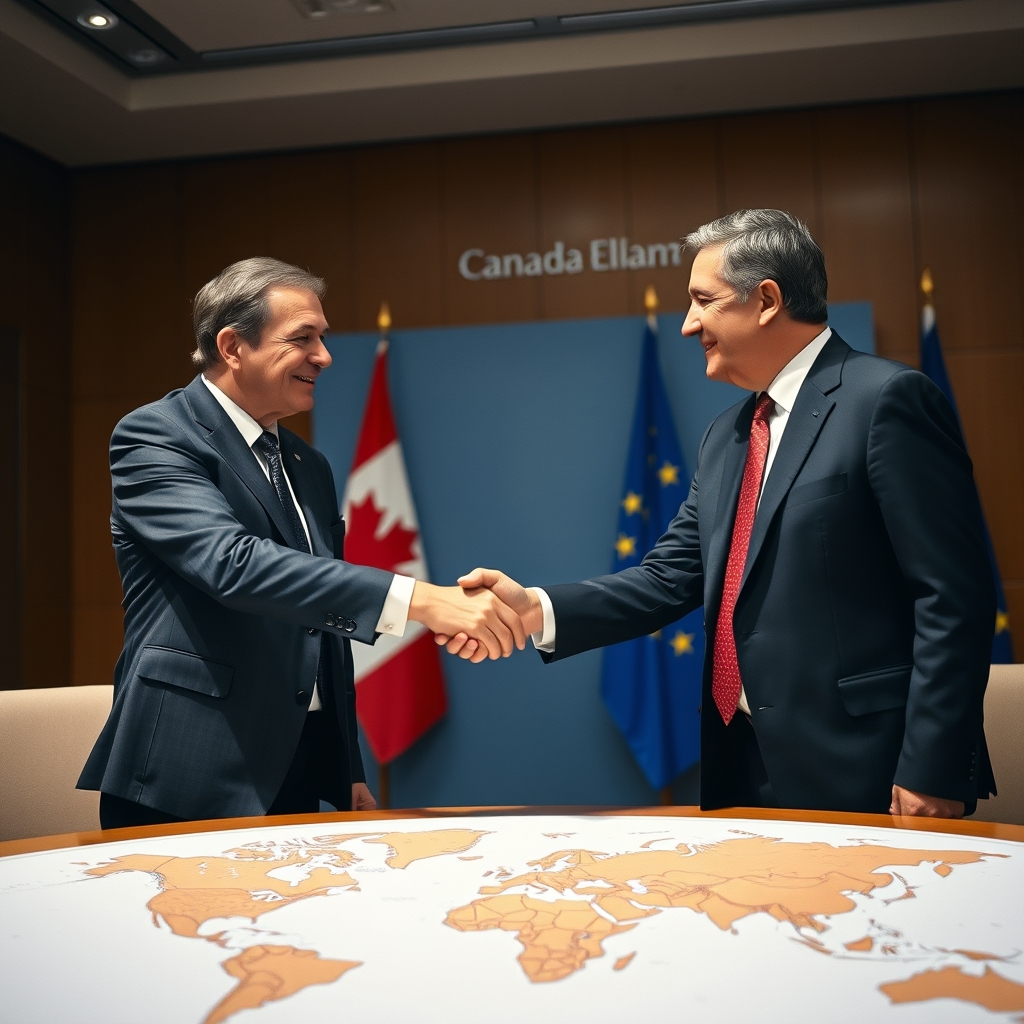
Canada pushes for EU associate membership as US‑Canada trade war heats up
Canada’s prime minister, Justin Carney, said the European Union’s invitation to become its first “associate member” marks a new chapter for trans‑Atlantic cooperation. The proposal arrives as Washington and Ottawa clash over tariffs, and it could reshape where Canada sources critical minerals, energy and technology.
According to BBC News, Carney made the comments to the European Parliament in Strasbourg, stressing that Canada and Europe are “stronger together” in the face of what he called “geopolitical rupture”.
What the EU associate membership proposal entails
The EU has never created an “associate member” status, so the idea is still purely conceptual. In practice, it would require the unanimous approval of all 27 member states and a treaty‑level change to EU law. The proposal hints at deeper integration in four areas:
- Defence – joint procurement and shared strategic planning.
- Critical minerals – coordinated supply‑chain security for metals used in batteries and electronics.
- Energy – cooperation on liquefied natural gas (LNG) and hydrogen to bolster European energy security.
- People‑to‑people ties – access for Canadians to the EU’s Erasmus+ programme, allowing study, work and travel across the Atlantic.
Because the status does not exist, the exact rights and obligations are unknown. It would sit above the existing Canada‑EU Comprehensive Economic and Trade Agreement (CETA) but below full EU membership, which Canada has ruled out.
How it builds on the existing Canada‑EU relationship
Canada already enjoys a free‑trade pact with the bloc, CETA, which eliminates most tariffs on goods and opens services markets. The two sides also collaborate on defence research, space missions and joint scientific projects. The associate‑membership idea would extend that cooperation into sectors that are currently only loosely linked.
| Feature | Current CETA arrangement | Proposed associate membership |
|---|---|---|
| Tariff regime | Zero tariffs on most goods; limited rules of origin | Same tariff treatment plus deeper regulatory alignment (potentially more EU standards) |
| Defence cooperation | Joint exercises, research | Formal joint procurement, shared strategic doctrine |
| Critical minerals | Market access for Canadian metals | Coordinated stock‑piling, joint investment in extraction and processing |
| Energy | Trade in LNG and electricity | Integrated energy security strategy, joint hydrogen projects |
| Mobility | Visa‑free travel for short stays | Full participation in Erasmus+, easier work‑study permits |
The table shows that most of the proposed benefits are extensions of what already exists, not completely new programmes. The biggest shift would be a political commitment to align Canada more closely with EU standards and strategic goals.
The geopolitical backdrop: US‑Canada trade dispute and Trump’s reaction
The timing of the EU’s overture is no coincidence. After bilateral talks collapsed in July, the United States and Canada have been trading tit‑for‑tat tariffs on steel, aluminium and other products. President Donald Trump called the EU proposal “laughable” and warned he could impose “very serious tariffs” on Europe if he deemed the move hostile.
Carney framed the dispute as “weaponised trade”: tariffs used as political pressure rather than purely economic tools. By deepening ties with Europe, Canada hopes to diversify its supply chains and reduce vulnerability to US‑driven trade spikes. The move also signals to Washington that Canada is not a passive pawn in the dispute.
The hidden cost: Canada may lose leverage with the US
While the EU partnership promises new markets and strategic depth, it also creates a trade‑off that the proposal glosses over. Aligning with European standards in areas like critical minerals and energy could make Canadian exporters less flexible in the US market, where regulations differ. If Canada adopts EU‑centric rules for hydrogen or battery components, American firms might face higher compliance costs, potentially prompting them to source elsewhere.
Moreover, an associate‑member status could lock Canada into a diplomatic stance that limits its ability to negotiate with the United States on a case‑by‑case basis. The United States remains Canada’s largest trading partner; any perception that Canada is moving toward a rival bloc could invite retaliatory measures beyond the tariff threats already voiced by Trump.
In practice, the trade‑off means Canadian businesses will need to weigh the certainty of deeper EU access against the risk of alienating their biggest customer. Policy makers will have to balance the desire for “strategic autonomy” with the practical reality of a North‑American supply chain that still depends heavily on US ports, railways and logistics.
What to watch next
- Montreal summit (late October) – Canadian and EU leaders will flesh out the details. Look for concrete proposals on regulatory alignment and funding mechanisms.
- Parliamentary debate in Canada – The government has said a vote will follow the summit. Party positions, especially from the opposition, will reveal how contentious the idea is domestically.
- EU internal politics – Some member states have expressed reservations about creating a new membership tier. Their stance will shape how quickly, if at all, the associate status can be formalised.
- US response – Any escalation in tariff threats or new legislation targeting EU‑linked imports would be a clear signal of how far the US is willing to push back.
- Industry preparation – Companies in the critical‑minerals and clean‑energy sectors should start mapping EU regulatory requirements, as early alignment could secure future contracts.
Bottom‑line advice for Canadians today
If you run a business that exports to either the US or the EU, start a compliance audit now. Identify which EU standards—especially in clean‑energy technology and mineral processing—might apply under a deeper partnership, and compare them with US requirements. Diversify your supply chain where possible; a modest shift toward European buyers can hedge against a sudden US tariff increase. Finally, keep an eye on the October summit agenda and be ready to engage with industry groups that will lobby the Canadian parliament on the final shape of any associate‑member framework.