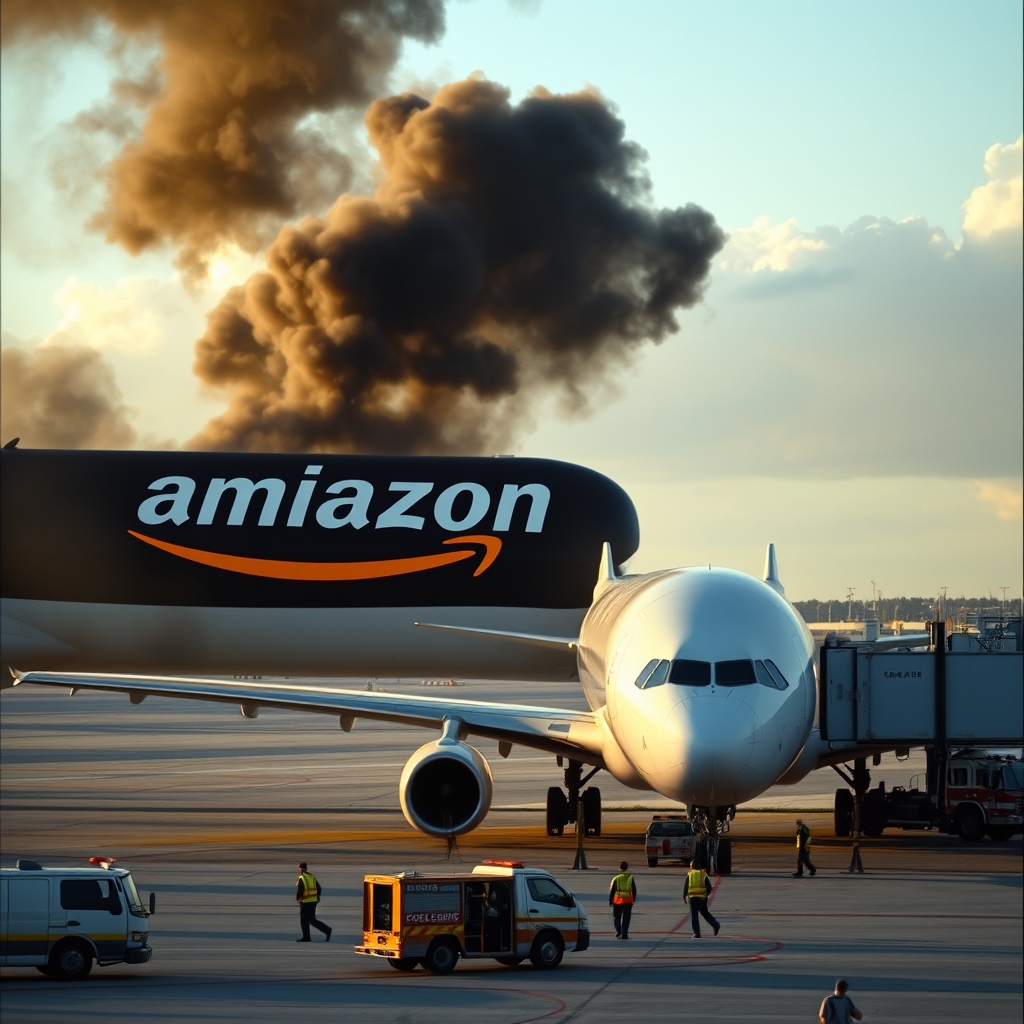
Five dead after Amazon cargo plane crashes at Miami airport
According to BBC News, an Amazon Air Boeing 767‑300 cargo plane overshot the runway at Miami International Airport on Sunday, killing five people and injuring five more. The accident occurred just before 14:00 local time as the aircraft, operated by charter firm 21 Air, attempted to land after departing from San Juan, Puerto Rico. The crash triggered an immediate FAA grounding of flights and a large emergency response.
What happened
The plane left the "usable runway" at a speed of 112 knots (129 mph, 207 km/h) and continued beyond the runway end, striking several ground vehicles before coming to rest near a parking lot that serves an Amazon warehouse and other businesses. Light thunderstorms and gusting winds were reported in Miami at the time, conditions that can reduce braking effectiveness and increase the likelihood of an overrun. The aircraft caught fire, creating heavy flames and smoke, and a fuel leak persisted after the flames were extinguished.
Immediate fallout
The Federal Aviation Administration ordered all flights at Miami International Airport to be grounded while fire crews battled the blaze and inspected the runway. Over 200 firefighters responded, eventually putting out the flames but leaving a fuel leak to be managed. Miami‑Dade County Mayor Daniella Levine Cava confirmed five deaths and five injuries, three of them in critical condition. Rescue crews extricated several injured people who were trapped inside or under the struck vehicles.
Passengers at the airport reported frustration over the lack of information, and many flights were cancelled or delayed. Long lines formed at airline counters as travelers tried to re‑book, with some forced to spend an extra night in Miami. The Transportation Security Administration (TSA) expects 17 million travellers to pass through U.S. airports in the week leading up to Labor Day, including 2.3 million on Sunday alone, underscoring how the crash hit a peak travel period.
The role of 21 Air and Amazon Air
The flight was not a regular Amazon airline service but a charter operated by 21 Air, a North Carolina‑based company that contracts with Amazon for cargo transport. Amazon’s public statement emphasized its cooperation with authorities and expressed condolences, but the incident raises questions about how much control Amazon has over safety practices of its charter partners. For Amazon, any disruption to its air‑freight network can ripple through its fulfillment centers, especially during a holiday shopping window.
What actually changes – the hidden trade‑offs
The crash does not merely add a tragic headline; it shifts the risk‑reward balance for companies that rely on private charter cargo. On the one hand, charter flights like this one give Amazon flexibility to move large volumes of goods quickly, bypassing the constraints of scheduled airlines. On the other hand, they place safety oversight in the hands of smaller operators that may not have the same resources or regulatory scrutiny as major carriers. In practice this usually means a tighter look from the FAA and the National Transportation Safety Board (NTSB) after the investigation concludes. If the NTSB points to weather, runway length, or operational decisions, airlines may be required to adjust flight‑crew training, impose stricter weight limits, or invest in runway safety equipment such as arresting nets. Those changes could increase operating costs and potentially slow the speed at which Amazon can replenish inventory.
What to watch next
The NTSB will hold a news conference on Monday and later release a preliminary report. Key points to monitor are:
- Weather versus human error – whether the light thunderstorms and gusting winds played a decisive role or if crew decisions (speed, touchdown point) contributed.
- Runway safety – Miami International’s diagonal runway is 10,000 feet long; investigators will check if the aircraft’s landing weight and speed were within the runway’s stopping capability.
- Charter oversight – any recommendations on how Amazon and the FAA supervise charter operators could affect the broader cargo‑air market.
- Supply‑chain impact – Amazon may reroute freight through other hubs or increase reliance on ground transport in the short term, which could affect delivery times for customers awaiting holiday orders.
Quick actions for travelers and businesses
- Travelers: Check your flight status directly with the airline before heading to the airport. If you’re booked through Miami International, be prepared for possible delays and consider alternative airports (Fort Lauderdale‑Hollywood or Orlando) for critical trips.
- Businesses using Amazon freight: Review your inventory buffers and consider secondary logistics providers for high‑value or time‑sensitive shipments, especially during peak travel weeks.
- Local residents: Stay away from the crash site until the fuel leak is fully contained, and follow any road‑closure notices issued by Miami‑Dade Fire Rescue.